Driving in the United Arab Emirates is a privilege that comes with serious responsibilities. The UAE has some of the most modern roads and highways in the world, but with great infrastructure comes strict traffic laws. Whether you are a new driver, an experienced motorist, or someone planning to drive in the UAE, understanding vehicle fines and penalties is essential for safe and legal driving.
Every year, thousands of drivers receive traffic fines for various violations ranging from speeding to parking in restricted areas. These penalties are not just about paying money; they are designed to ensure road safety and protect everyone using the roads. This comprehensive guide will walk you through everything you need to know about UAE vehicle fines and penalties, helping you become a more responsible driver while avoiding unnecessary financial burdens.
Understanding the UAE Traffic Law System
The UAE takes road safety extremely seriously. The traffic laws apply to all seven emirates, though some specific regulations may vary slightly between Abu Dhabi, Dubai, Sharjah, and other emirates. The Federal Traffic Law governs most traffic-related matters across the country, ensuring consistency and fairness.
Traffic fines in the UAE serve multiple purposes. They discourage dangerous driving behaviors, promote road safety awareness, and help maintain order on the roads. The penalties are structured based on the severity of the violation, with minor infractions receiving smaller fines and serious offenses resulting in heavy penalties, black points, vehicle confiscation, or even imprisonment.
Gulf24Tv regularly reports on traffic regulations and updates, helping residents stay informed about the latest changes in traffic laws. Staying updated through reliable sources ensures you never miss important announcements that could affect your driving privileges.
Common Traffic Violations and Their Penalties
Speeding Violations
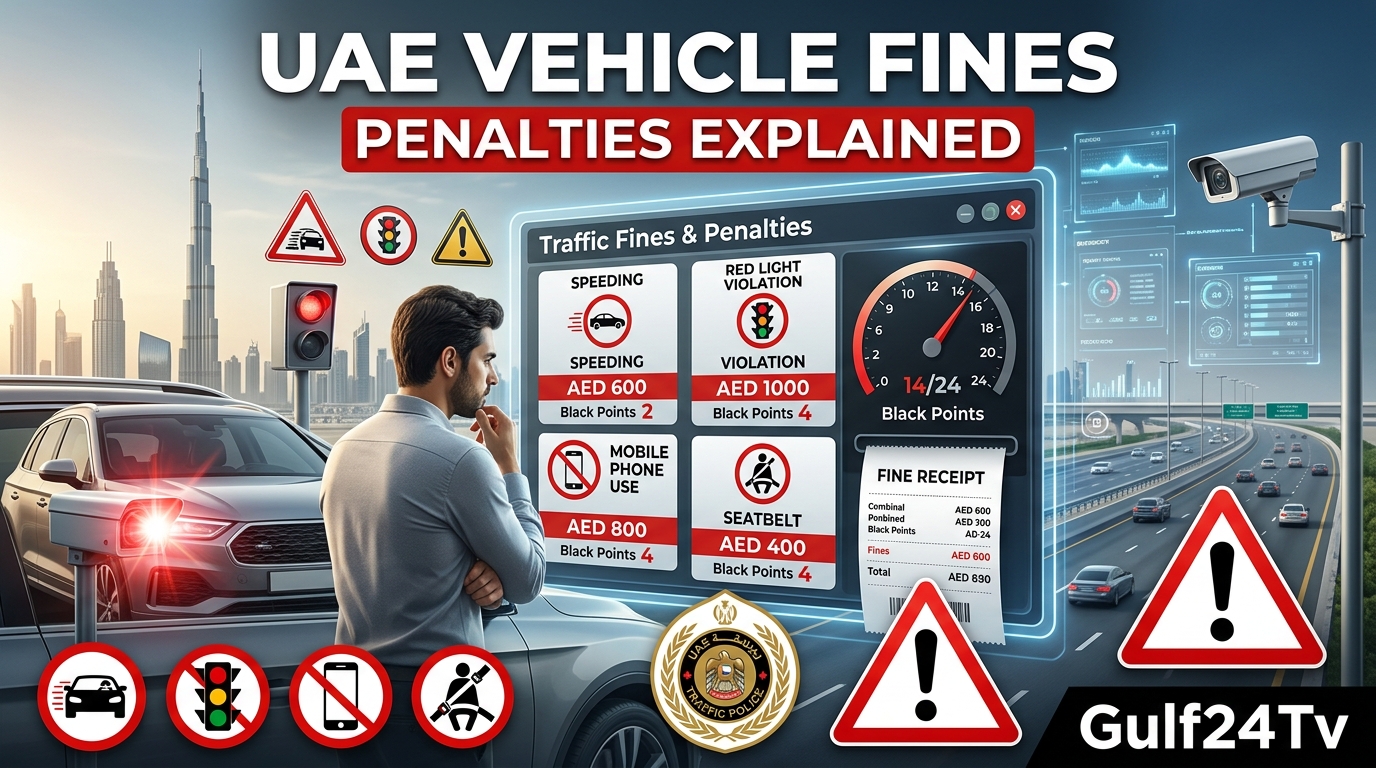
Speeding remains one of the most common traffic violations in the UAE. The fines for speeding vary depending on how much you exceed the speed limit. If you drive just a few kilometers over the limit, you might receive a smaller fine. However, excessive speeding can result in fines reaching thousands of dirhams, along with black points and vehicle confiscation.
For example, exceeding the speed limit by up to 20 kilometers per hour typically results in a fine of 300 AED. Going 30 kilometers over the limit increases the penalty to 600 AED. Extreme speeding violations, where drivers exceed limits by 60 kilometers per hour or more, can lead to fines of 3,000 AED, 23 black points, and vehicle confiscation for 60 days.
Running Red Lights
Ignoring traffic signals is one of the most dangerous violations. When you run a red light, you risk causing serious accidents that could harm innocent people. The UAE imposes a fine of 1,000 AED and 12 black points for this violation. Additionally, your vehicle may be confiscated for 30 days.
Mobile Phone Usage While Driving
Using your mobile phone while driving distracts you from the road and significantly increases accident risks. The penalty for this violation is 800 AED and 4 black points. This includes texting, making calls without hands-free devices, or even holding the phone while driving.
Not Wearing Seatbelts
Seatbelts save lives, which is why failing to wear one results in a 400 AED fine and 4 black points. This applies to both drivers and passengers. Children must be properly secured in appropriate car seats according to their age and size.
Illegal Parking
Parking violations might seem minor, but they can disrupt traffic flow and emergency services. Fines for parking violations range from 200 AED for parking in disabled spaces without permission to 500 AED for parking in no-parking zones. Some violations also include vehicle confiscation until the fine is paid.
Driving Without Valid Insurance or Registration
Every vehicle must have valid insurance and registration. Driving without these documents results in a 500 AED fine and 4 black points. Your vehicle may also be impounded until you provide proper documentation.
The Black Points System Explained
The black points system is a crucial part of UAE traffic law enforcement. This system tracks your driving behavior over time. When you commit a traffic violation, you receive both a monetary fine and black points added to your driving record.
Different violations carry different black point values, ranging from 2 points for minor infractions to 24 points for serious offenses. If you accumulate 24 black points within one year, your driving license gets suspended. The suspension period depends on the vehicle type you drive.
For light vehicle drivers, the license suspension lasts three months for the first offense, six months for the second offense within a year, and one year for the third offense. Commercial vehicle drivers face even stricter consequences because they hold greater responsibility on the roads.
Black points remain on your record for one year from the violation date. After one year without new violations, the points are automatically removed. This system encourages drivers to maintain good driving habits consistently.
How to Check Your Traffic Fines
Checking your traffic fines has become incredibly easy with modern technology. You have several convenient options to stay updated on any penalties you might have received.
The official police apps for each emirate allow you to check fines using your vehicle details or traffic file number. Dubai Police has the Dubai Police app, Abu Dhabi has the Abu Dhabi Police app, and other emirates have their respective platforms. These apps are available for both Android and iOS devices.
You can also check fines through official government websites. Simply visit the relevant police department website, navigate to the traffic services section, and enter your vehicle information. The system will display all outstanding fines, including details about the violation, fine amount, black points, and when and where the violation occurred.
SMS services are another option. You can register your mobile number with the traffic department and receive instant notifications whenever you receive a traffic fine. This helps you address violations quickly before they accumulate.
Gulf24Tv provides regular updates and guides on using these services, making it easier for residents to navigate the digital platforms effectively. For more helpful information and guides, you can visit https://paklife.net/ where similar resources are available.
Payment Methods for Traffic Fines
Once you know about your traffic fines, paying them promptly is important. The UAE offers multiple convenient payment methods to suit everyone’s preferences.
You can pay fines online through official police websites and apps. This is the fastest and most convenient method. Simply select the fines you want to pay, enter your payment card details, and complete the transaction. The fine gets cleared from your record immediately.
Physical payment centers are located throughout each emirate. You can visit these centers, present your Emirates ID or driving license, and pay using cash or card. The staff at these centers can also help you understand the violations and answer any questions.
Many banks offer traffic fine payment services through their ATMs, mobile apps, and online banking platforms. You can also pay fines at authorized exchange houses and kiosks in shopping malls and public areas.
Some violations allow for a discount if you pay within a certain period. Checking the fine details helps you take advantage of these offers and save money.
Vehicle Confiscation and Release Process
For serious traffic violations, authorities may confiscate your vehicle. Understanding the confiscation and release process helps you navigate this situation if it happens to you.
Vehicles are typically confiscated for violations like extreme speeding, reckless driving, racing on public roads, running red lights, and driving under the influence of alcohol or drugs. The confiscation period varies based on the violation severity, ranging from 7 days to 90 days.
To release your vehicle, you must first pay all outstanding fines associated with the violation. Then, you need to visit the relevant police department with the required documents, including your Emirates ID, driving license, vehicle registration, and proof of payment. You may also need to pay a daily storage fee for the period your vehicle was impounded.
The authorities will inspect your vehicle before release to ensure it meets safety standards. Once everything is in order, you can collect your vehicle from the impound lot.
Tips to Avoid Traffic Fines and Penalties
Prevention is always better than paying fines. Following these practical tips helps you maintain a clean driving record and stay safe on the roads.
Always observe speed limits and adjust your speed according to road conditions. Use cruise control on highways to maintain consistent speed and avoid unintentional speeding. Pay attention to speed limit signs, especially when limits change.
Plan your routes before driving and use navigation apps to avoid getting lost or making sudden illegal turns. Give yourself extra time to reach your destination so you do not feel pressured to rush.
Never use your mobile phone while driving. If you need to make a call, use a hands-free system or pull over safely to the side of the road. Remember that even holding your phone while driving is a violation.
Always wear your seatbelt and ensure all passengers do the same. Make sure children are properly secured in appropriate car seats. This simple habit can save lives and prevent fines.
Respect traffic signals and road signs. Never run red lights, even if the road appears clear. Stop completely at stop signs and yield when required.
Park only in designated areas. Take a few extra minutes to find legal parking rather than risking a fine or inconveniencing others. Disabled parking spaces are for authorized users only.
Keep your vehicle registration and insurance up to date. Set reminders on your phone or calendar for renewal dates so you never drive with expired documents.
Regular vehicle maintenance ensures your car is roadworthy and complies with safety standards. Check your lights, brakes, tires, and other essential components regularly.
Stay informed about traffic law updates through reliable sources like Gulf24Tv, which provides timely information about changes in regulations and new traffic initiatives.
Special Considerations for New Drivers
If you are new to driving in the UAE, the traffic rules might seem overwhelming at first. However, understanding the basics and practicing safe driving habits will help you adapt quickly.
Take time to familiarize yourself with local driving customs and road etiquette. Driving styles may differ from what you experienced in other countries. Observe how experienced drivers navigate roundabouts, merge on highways, and handle various traffic situations.
Consider taking additional driving lessons even if you already have a license from another country. Professional instructors can teach you specific UAE road rules and help you build confidence.
Start with shorter trips during less busy times to build your experience gradually. As you become more comfortable, you can tackle longer journeys and busier roads.
Join online communities and forums where expatriates and residents share driving experiences and tips. Learning from others’ experiences can help you avoid common mistakes.
Understanding Your Rights as a Driver
While knowing your responsibilities is important, understanding your rights is equally essential. The UAE legal system provides protections for drivers who receive traffic fines.
If you believe you received a fine unfairly or due to an error, you have the right to contest it. You can file an objection through the police department that issued the fine. Provide any evidence supporting your case, such as photos, videos, or witness statements.
The authorities will review your objection and make a decision based on the evidence. If they find in your favor, the fine will be cancelled. However, if the decision stands, you must pay the fine as originally issued.
You also have the right to request fine installments if you face financial difficulties. Some police departments offer payment plans that allow you to pay large fines in smaller monthly amounts.
Understanding these rights empowers you to navigate the system fairly and ensures you receive just treatment.
The Role of Technology in Traffic Law Enforcement
The UAE uses cutting-edge technology to monitor traffic and enforce laws. Understanding how these systems work helps you appreciate the sophisticated infrastructure that keeps roads safe.
Radar cameras automatically detect speeding violations and capture images of offending vehicles. These cameras operate day and night, in all weather conditions. Some radars even measure average speed over long distances to catch drivers who slow down only when passing cameras.
Red light cameras capture vehicles that cross intersections after the signal turns red. These cameras record both still images and video footage as evidence.
Smart patrol cars equipped with license plate recognition technology can instantly identify vehicles with outstanding fines, expired registration, or stolen status. Officers receive real-time alerts about vehicles passing them on the road.
Artificial intelligence systems analyze traffic patterns and predict potential congestion or safety issues. This technology helps authorities deploy resources effectively and improve overall road safety.
Gulf24Tv often features stories about new technological implementations in traffic management, keeping the public informed about innovations that affect their daily commutes.
Financial Impact of Traffic Fines
Traffic fines can significantly affect your finances, especially if violations accumulate. Understanding the financial implications helps you prioritize safe driving.
A single serious violation like excessive speeding or running a red light can cost you 1,000 AED or more. If your vehicle gets confiscated, you face additional storage fees that accumulate daily. These costs can quickly add up to thousands of dirhams.
Multiple violations in a short period can strain your budget and create financial stress. Some insurance companies also consider your traffic violation history when calculating premiums. A poor driving record might result in higher insurance costs.
License suspension due to black points means you cannot drive legally, which might affect your job, especially if driving is part of your work responsibilities. You might need to rely on taxis or other transportation, adding more expenses.
Planning your finances to account for vehicle-related costs, including potential fines, helps you manage your budget better. However, the best financial strategy is simply driving safely and avoiding violations altogether.
Environmental Violations and Penalties
The UAE also enforces environmental regulations related to vehicles. These rules protect air quality and promote environmental sustainability.
Excessive smoke emissions from vehicles result in fines. Regular vehicle maintenance and timely servicing help ensure your car meets emission standards. Annual vehicle tests check emission levels and other safety features.
Littering from vehicles, such as throwing trash out of windows, carries penalties. Keep a small bag in your car for trash and dispose of it properly at designated locations.
Washing your car in unauthorized areas or on public streets may also result in fines in some emirates. Use designated car wash facilities that properly manage water usage and waste disposal.
Understanding these environmental regulations helps you contribute to the UAE’s sustainability goals while avoiding unnecessary penalties.
Frequently Asked Questions
What happens if I do not pay my traffic fines?
Unpaid traffic fines accumulate and prevent you from renewing your vehicle registration. You also cannot renew your driving license until all fines are cleared. In some cases, unpaid fines can lead to travel bans, preventing you from leaving the country until you settle your debts.
Can tourists receive traffic fines in the UAE?
Yes, tourists driving in the UAE must follow all traffic laws. If you rent a car and commit a violation, the rental company will charge the fine to your credit card along with an administrative fee. Tourists must also clear all fines before leaving the country.
How long do black points stay on my record?
Black points remain on your driving record for one year from the violation date. If you do not commit any new violations during that year, the points are automatically removed. However, if you accumulate 24 points within a year, your license gets suspended regardless of the removal timeline.
Can I transfer ownership of a vehicle with outstanding fines?
No, you cannot transfer vehicle ownership if there are outstanding fines. All fines must be cleared before the ownership transfer process can proceed. The new owner will not accept responsibility for fines incurred before they owned the vehicle.
What should I do if I receive a fine for a violation I did not commit?
If you receive a fine for a violation you did not commit, perhaps because someone else was driving your vehicle, you can file an objection. However, as the registered owner, you are generally responsible for violations committed with your vehicle. Some circumstances allow you to identify the actual driver, who would then assume responsibility for the fine and black points.
Are there different rules for different emirates?
While the Federal Traffic Law applies across the UAE, some emirates have additional specific regulations. For example, parking rules and fees may vary between Dubai, Abu Dhabi, and Sharjah. Always check local regulations when driving in different emirates.
Can I reduce my black points?
The UAE occasionally offers black point reduction programs where safe driving over a specific period can reduce accumulated points. Some emirates allow drivers to attend traffic awareness courses that remove a certain number of black points upon completion. Check with your local traffic department for current programs.
What is the penalty for driving without a license?
Driving without a valid license results in a fine of 5,000 to 10,000 AED and vehicle confiscation for 60 days. This is considered a serious violation because unlicensed drivers pose significant safety risks to themselves and others.
Conclusion
Understanding UAE vehicle fines and penalties is essential for everyone who drives in the Emirates. The traffic laws exist to protect you, your passengers, and everyone sharing the road. While the penalties might seem strict, they reflect the UAE’s commitment to maintaining some of the safest roads in the world.
By following traffic rules, staying informed about regulations, and practicing safe driving habits, you can avoid fines and contribute to a safer driving environment for everyone. Remember that every traffic rule has a purpose, and respecting these rules is not just about avoiding penalties but about valuing human life and safety.
Stay updated with the latest traffic news and regulations through reliable sources like Gulf24Tv. Make safe driving a habit rather than an obligation. Your commitment to responsible driving makes UAE roads safer for everyone.
For more helpful guides and information on living in the UAE and beyond, visit https://paklife.net/ where you will find resources covering various aspects of daily life, regulations, and practical tips.
Drive safely, stay alert, and remember that reaching your destination safely is more important than reaching it quickly. Your life and the lives of others depend on the choices you make behind the wheel.