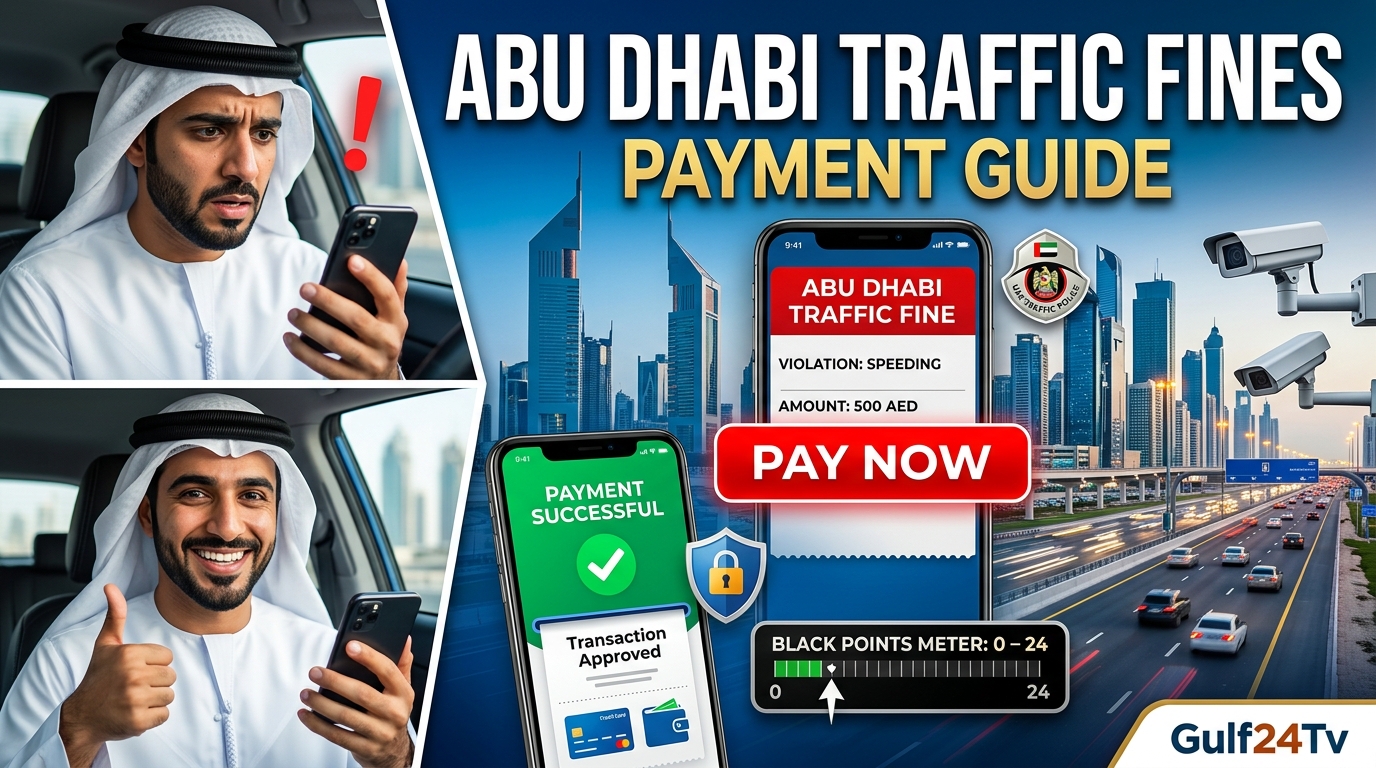
Abu Dhabi, the magnificent capital of the United Arab Emirates, boasts some of the most advanced road networks in the world. From the stunning Corniche Road to the modern highways connecting the city to other emirates, driving in Abu Dhabi is an experience that combines luxury with responsibility. However, with great roads come strict traffic regulations designed to keep everyone safe.
Every day, thousands of drivers navigate Abu Dhabi’s streets, and understanding the traffic fine system is essential for anyone who drives in the capital. Whether you are a resident, an expatriate, or a visitor, knowing about traffic violations, fines, and payment methods helps you avoid unnecessary penalties and maintain a clean driving record.
This comprehensive guide will walk you through everything you need to know about Abu Dhabi traffic fines, from common violations to payment procedures. Gulf24Tv regularly updates drivers about traffic regulations, and this guide brings together all the essential information you need to drive safely and legally in Abu Dhabi.
Understanding Abu Dhabi Traffic Law System
Abu Dhabi follows the Federal Traffic Law of the UAE while also implementing specific regulations tailored to the emirate’s unique infrastructure and traffic patterns. The Abu Dhabi Police Traffic Department oversees all traffic-related matters, from issuing licenses to enforcing traffic laws and managing road safety initiatives.
The traffic fine system in Abu Dhabi serves multiple important purposes. It discourages dangerous driving behaviors that could lead to accidents, promotes awareness about road safety, and ensures that all road users follow the same rules for fairness and order.
Abu Dhabi’s approach to traffic management combines traditional enforcement with cutting-edge technology. The emirate has invested heavily in smart traffic systems, automated cameras, and artificial intelligence to monitor roads and detect violations instantly. This technological integration makes the system highly efficient and fair.
Traffic violations in Abu Dhabi result in monetary fines, black points added to your driving record, and sometimes vehicle confiscation or license suspension. The severity of penalties depends on how dangerous the violation is and whether you have committed similar offenses before.
Gulf24Tv provides regular updates about changes in Abu Dhabi traffic regulations, helping drivers stay informed about new laws, special campaigns, and safety initiatives launched by authorities.
Common Traffic Violations in Abu Dhabi
Speeding Offenses
Speeding remains the most frequent traffic violation in Abu Dhabi. The emirate has speed limits ranging from 40 kilometers per hour in residential areas to 140 kilometers per hour on certain highways. Speed cameras are strategically placed throughout the road network to monitor and enforce these limits.
The fines for speeding violations vary based on how much you exceed the speed limit. Exceeding the limit by up to 20 kilometers per hour results in a fine of 300 AED. Going 21 to 30 kilometers over the limit increases the penalty to 600 AED. Speeding by 31 to 40 kilometers over brings a fine of 700 AED.
More serious speeding violations carry heavier consequences. Exceeding the speed limit by 41 to 50 kilometers per hour results in a 1,000 AED fine and 6 black points. Going 51 to 60 kilometers over the limit brings a 1,500 AED fine, 6 black points, and 30 days of vehicle confiscation.
The most severe category is exceeding the speed limit by more than 60 kilometers per hour. This violation results in a massive 3,000 AED fine, 23 black points, and your vehicle being confiscated for 60 days. This penalty reflects how extremely dangerous such high speeds are to everyone on the road.
Jumping Red Lights
Running a red light is one of the most dangerous violations because it can cause devastating accidents at intersections. Abu Dhabi treats this offense very seriously. The penalty for jumping a red light is 1,000 AED, 12 black points, and vehicle confiscation for 30 days.
Red light cameras at intersections throughout Abu Dhabi capture both images and videos of violations. These cameras are active 24 hours a day, ensuring that every violation is recorded. The footage serves as evidence that drivers cannot dispute.
Mobile Phone Usage While Driving
Using your mobile phone while driving significantly increases your risk of causing an accident. Whether you are texting, browsing social media, or making a call without a hands-free device, this behavior is prohibited in Abu Dhabi.
The fine for using a mobile phone while driving is 800 AED and 4 black points. This penalty applies even if you are just holding the phone while stopped at a traffic light. The only legal way to use your phone is through a properly installed hands-free system.
Sudden Swerving and Reckless Driving
Sudden lane changes without proper signaling, cutting off other vehicles, and reckless driving behaviors are common causes of accidents. Abu Dhabi imposes a fine of 1,000 AED and 4 black points for sudden swerving that endangers others.
Reckless driving that seriously threatens public safety can result in even heavier penalties, including fines up to 2,000 AED, 23 black points, and vehicle confiscation for 60 days.
Not Wearing Seatbelts
Seatbelts are your first line of defense in case of an accident. Not wearing a seatbelt while driving or riding in a vehicle results in a 400 AED fine and 4 black points. This applies to all passengers in the vehicle, not just the driver.
Children under a certain age and height must be secured in appropriate child safety seats. Failing to properly secure children can result in fines of 400 AED and 4 black points as well.
Parking Violations
Abu Dhabi has specific parking regulations to ensure smooth traffic flow and access for emergency services. Common parking violations include parking in disabled spaces without authorization, parking in no-parking zones, parking on pedestrian crossings, and parking in areas reserved for emergency vehicles.
Parking fines typically range from 200 AED to 500 AED depending on the specific violation. Some parking offenses also result in vehicle towing, which adds additional fees for retrieval and storage.
Driving Without Valid Documents
Every driver must carry a valid driving license, vehicle registration, and insurance certificate while driving. Operating a vehicle without these essential documents results in fines and black points.
Driving without a valid license carries a fine of 5,000 to 10,000 AED and vehicle confiscation. Driving without valid insurance results in a 500 AED fine and 4 black points. Driving with an expired vehicle registration also brings a 500 AED fine and 4 black points.
Vehicle Modification Violations
Modifying your vehicle in ways that violate safety standards or environmental regulations is prohibited. Installing excessively loud exhaust systems, improper tinting that exceeds legal limits, or making structural modifications without approval can result in fines ranging from 500 AED to 1,000 AED.
Authorities may require you to remove unauthorized modifications before releasing your vehicle or renewing your registration.
The Black Points System in Abu Dhabi
The black points system is a crucial component of traffic law enforcement in Abu Dhabi. This system tracks your driving behavior over time and helps authorities identify habitual offenders who pose ongoing safety risks.
When you commit a traffic violation, you receive both a monetary fine and black points added to your driving record. Different violations carry different black point values ranging from 2 points for minor infractions to 24 points for extremely serious offenses.
The accumulation of black points has serious consequences. If you collect 24 or more black points within one year, your driving license gets suspended. For light vehicle drivers, the suspension period is three months for the first offense. If you accumulate 24 points again within a year after license reinstatement, the suspension extends to six months. A third accumulation of 24 points results in a one-year suspension.
Commercial vehicle drivers face stricter rules because they carry greater responsibility. Their licenses get suspended for six months on the first offense of accumulating 24 points.
Black points remain on your driving record for one year from the violation date. After one year passes without new violations, the points automatically disappear from your record. This system encourages consistent safe driving rather than temporary good behavior.
Understanding your black point balance helps you monitor your driving record and take corrective action before facing license suspension. Gulf24Tv regularly reminds drivers to check their black points and provides information about traffic awareness programs that can help reduce accumulated points.
How to Check Your Abu Dhabi Traffic Fines
Checking your traffic fines in Abu Dhabi has become incredibly convenient thanks to modern digital services. You have several options to stay updated on any violations you might have received.
The Abu Dhabi Police app is the most popular and convenient method. Available for both Android and iOS devices, this free app allows you to check fines, pay them, report accidents, and access various other traffic services. Simply download the app, register using your Emirates ID or traffic file number, and you can view all your violations with complete details including the violation type, date, location, fine amount, and black points.
The official Abu Dhabi Police website offers the same services through your computer browser. Visit the website, navigate to the traffic services section, and enter your vehicle details or traffic file number. The system displays all outstanding fines with options to pay online immediately.
SMS services provide another checking method. You can send a text message with your vehicle plate number to the designated short code, and you will receive a reply listing your outstanding fines. This method works even when you do not have internet access.
Many third-party apps and services also integrate with the Abu Dhabi Police system to provide fine checking services. However, always ensure you use trusted and authorized platforms to protect your personal information.
Physical service centers located throughout Abu Dhabi allow you to check fines in person. Staff members can help you understand the violations and provide guidance on payment procedures. These centers are particularly helpful if you have questions about specific violations or need assistance navigating the system.
Regular fine checking is a good habit that helps you address violations promptly. Some fines offer early payment discounts, so checking regularly can save you money. It also prevents surprises when you try to renew your vehicle registration or driving license.
Payment Methods for Abu Dhabi Traffic Fines
Once you know about your traffic fines, paying them quickly is important. Abu Dhabi offers multiple convenient payment methods to suit different preferences and situations.
Online payment through the Abu Dhabi Police app or website is the fastest and most convenient method. Simply select the fines you want to pay, enter your credit or debit card information, and complete the transaction. The fine is cleared from your record immediately, and you receive a digital receipt for your records.
The app accepts all major credit and debit cards including Visa, Mastercard, and local banking cards. The payment process is secure and encrypted to protect your financial information.
Many banks operating in Abu Dhabi offer traffic fine payment services through their mobile banking apps and online platforms. If you bank with institutions like Abu Dhabi Commercial Bank, First Abu Dhabi Bank, or Emirates NBD, you can pay fines directly through your banking app without switching to the police app.
ATMs throughout Abu Dhabi also provide fine payment services. Simply insert your bank card, select the traffic fine payment option, enter your vehicle details, and complete the payment. This method accepts both cash and card payments depending on the ATM type.
Physical payment centers operated by Abu Dhabi Police accept cash and card payments. These centers are located in various areas throughout the emirate for easy access. The staff can help you with the payment process and answer any questions about your violations.
Authorized exchange houses and payment kiosks in shopping malls and public areas provide another payment option. These locations are particularly convenient if you prefer paying in cash or need assistance with the payment process.
Some violations qualify for early payment discounts. Typically, if you pay within a certain period after receiving the fine, you might receive a discount of 25% to 35% off the total amount. Check your fine details to see if this discount applies, as it can result in significant savings, especially for multiple or expensive violations.
For those facing financial difficulties, Abu Dhabi Police sometimes offers installment payment plans for large fines. You can request this option by visiting a police service center and explaining your situation. If approved, you can pay your fines in smaller monthly amounts over an agreed period.
Vehicle Confiscation and Release Process
For serious traffic violations, Abu Dhabi Police may confiscate your vehicle for a specified period. Understanding this process helps you navigate the situation if it happens to you.
Vehicles are confiscated for violations such as extreme speeding, running red lights, reckless driving, street racing, driving under the influence of alcohol or drugs, and causing accidents through negligent driving. The confiscation period ranges from 7 days for some offenses to 90 days for the most serious violations.
When your vehicle is confiscated, you receive official notification about the violation, the confiscation period, and the location where your vehicle is being held. This information is also available through the Abu Dhabi Police app and website.
To release your vehicle after the confiscation period ends, you must follow specific steps. First, pay all outstanding fines associated with the violation. You cannot release your vehicle until all financial obligations are settled.
Next, gather the required documents including your Emirates ID, valid driving license, vehicle registration certificate (Mulkiya), and proof of payment for the fines. If someone else is collecting the vehicle on your behalf, they need a notarized authorization letter along with their own identification documents.
Visit the vehicle impound facility during working hours with all required documents. The authorities will verify your information and inspect your vehicle to ensure it meets safety and legal requirements. They will also calculate and collect the daily storage fees for the period your vehicle was impounded.
Storage fees typically range from 25 AED to 50 AED per day depending on the vehicle type. These fees can add up significantly for long confiscation periods, making serious violations extremely expensive beyond just the initial fine.
Once all requirements are met and fees are paid, you receive clearance to collect your vehicle. The authorities will provide you with the necessary paperwork to exit the impound facility with your vehicle.
If your vehicle has been confiscated for serious violations like driving under the influence, you might need to attend mandatory traffic awareness courses before your vehicle can be released. These educational programs aim to change dangerous driving behaviors and prevent repeat offenses.
Special Traffic Campaigns in Abu Dhabi
Abu Dhabi Police regularly launches special traffic campaigns focusing on specific violations or road safety themes. These campaigns often coincide with holidays, school seasons, or periods when certain violations increase.
During these campaigns, authorities increase monitoring and enforcement of targeted violations. Some campaigns offer reduced fines for early payment or opportunities to settle old violations with discounts. Others focus on education and awareness rather than just punishment.
For example, back-to-school campaigns emphasize safe driving in school zones and proper use of child safety seats. Summer campaigns often focus on vehicle maintenance and preventing breakdowns in extreme heat. Holiday campaigns target speeding and reckless driving when traffic volumes increase.
Gulf24Tv keeps drivers informed about upcoming campaigns, their focus areas, and any special offers or requirements. Staying updated about these campaigns helps you take advantage of discount opportunities and avoid areas with increased enforcement.
Tips to Avoid Traffic Fines in Abu Dhabi
Preventing traffic fines is always better than paying them. Following these practical tips helps you maintain a clean driving record and stay safe on Abu Dhabi’s roads.
Always observe posted speed limits and adjust your speed according to traffic and weather conditions. Use your vehicle’s cruise control on highways to maintain consistent speeds and avoid unintentional speeding. Pay attention to speed limit changes, especially when entering residential areas or school zones.
Plan your routes before driving using navigation apps like Google Maps or Waze. These apps show real-time traffic conditions, help you avoid congestion, and alert you to speed cameras and traffic incidents along your route. Knowing where you are going reduces stress and the temptation to make sudden illegal maneuvers.
Never use your mobile phone while driving unless you have a properly installed hands-free system. If you need to make urgent calls or check directions, pull over safely to the side of the road or wait until you reach your destination. The few minutes you save are not worth the fine or the risk of causing an accident.
Always wear your seatbelt and ensure all passengers do the same before starting your vehicle. Make this a non-negotiable habit that you never compromise. Properly secure children in age-appropriate car seats installed according to manufacturer instructions.
Respect all traffic signals and signs. Stop completely at red lights and stop signs. Never try to beat a yellow light that is about to turn red. Yield to pedestrians at crosswalks and to other vehicles when required by traffic rules.
Maintain safe following distances from vehicles ahead of you. The general rule is to stay at least two seconds behind the car in front, increasing this distance in poor weather or at higher speeds. Proper spacing gives you time to react safely if the vehicle ahead suddenly stops.
Use your turn signals every time you change lanes or turn. Signaling communicates your intentions to other drivers, allowing them to adjust accordingly and preventing accidents. Signal well before making your maneuver, not while you are already turning or changing lanes.
Park only in designated legal parking areas. Take extra time to find proper parking rather than risking a fine or causing inconvenience to others. Disabled parking spaces are strictly for authorized users with valid permits. Never park in these spaces even for quick errands.
Keep all your vehicle documents current and valid. Set calendar reminders for registration renewal, insurance expiration, and driver’s license renewal dates. Renewing documents on time is much cheaper and easier than dealing with fines and complications later.
Perform regular vehicle maintenance to ensure your car meets safety and environmental standards. Check your lights, brakes, tires, and fluid levels regularly. A well-maintained vehicle is safer and less likely to fail inspections or cause violations.
Stay informed about traffic laws and updates through reliable sources like Gulf24Tv. Traffic regulations occasionally change, and new initiatives are introduced regularly. Being aware of these changes helps you stay compliant and avoid violations due to outdated knowledge.
Enroll in defensive driving courses to improve your skills and awareness. These courses teach you how to anticipate and react to dangerous situations created by other drivers, weather conditions, or road hazards. Some insurance companies offer discounts for completing defensive driving programs.
Abu Dhabi Parking System and Regulations
Parking in Abu Dhabi is managed through a comprehensive system that includes both paid and free parking zones. Understanding this system helps you park legally and avoid unnecessary fines.
Mawaqif is the official parking management system in Abu Dhabi. The system divides parking areas into different zones indicated by colored signs and road markings. Premium zones, marked with orange signs, are located in high-demand areas like commercial districts and shopping centers. These zones have higher hourly rates but better availability.
Standard zones, marked with blue signs, are in residential and less busy areas with lower hourly rates. Some areas offer free parking during certain hours, typically in the evenings and on Fridays.
To park in paid zones, you must pay through various methods including SMS, the Mawaqif app, parking meters, or Darbi toll tag integration. Simply enter your vehicle plate number and select your parking duration. You receive confirmation and can extend your parking time remotely if needed.
Parking without payment in paid zones results in fines of 200 AED. Parking in disabled spaces without authorization brings a 1,000 AED fine. Parking in areas reserved for emergency services or blocking traffic can result in fines up to 500 AED plus vehicle towing.
Always check the parking zone signs for specific regulations, allowed parking times, and any restrictions. Some areas prohibit parking during certain hours for street cleaning or traffic management.
Traffic Awareness Programs and Black Point Reduction
Abu Dhabi Police offers traffic awareness programs designed to educate drivers about road safety and responsible driving. These programs also provide opportunities to reduce accumulated black points from your driving record.
The programs typically consist of classroom sessions where traffic experts discuss common violations, their consequences, and strategies for safe driving. Participants watch educational videos, engage in discussions, and sometimes participate in practical driving exercises.
Successful completion of approved traffic awareness courses can reduce your black point total by a certain number of points, usually 2 to 4 points depending on the program. This reduction helps drivers who are approaching the 24-point suspension threshold to avoid losing their licenses.
These programs are particularly valuable because they address the root causes of traffic violations rather than just punishing drivers. Many participants report that the courses genuinely change their driving behaviors and make them more conscious of road safety.
To enroll in traffic awareness programs, visit the Abu Dhabi Police website or app for information about upcoming sessions, eligibility requirements, registration procedures, and fees. Spaces in these programs are often limited, so early registration is recommended.
Understanding Your Rights as a Driver in Abu Dhabi
While knowing your responsibilities is essential, understanding your rights ensures fair treatment within the traffic law system.
If you believe you received a fine incorrectly or due to a system error, you have the right to file an objection. You can submit your objection through the Abu Dhabi Police website, app, or by visiting a service center in person. Provide any evidence supporting your case, such as photographs, videos, witness statements, or documentation proving the violation could not have occurred.
The authorities review objections carefully and make decisions based on available evidence. If your objection is valid, the fine and black points are removed from your record at no cost. If the objection is rejected, you must pay the fine as originally issued.
The objection period is typically limited to a certain number of days after receiving the fine, so act quickly if you believe you have grounds for contesting a violation.
You have the right to request detailed information about any violation, including photographs or video evidence captured by traffic cameras. This transparency ensures you understand exactly what violation occurred and can make informed decisions about payment or objection.
If you face financial hardship, you have the right to request installment payment plans for large fines. Abu Dhabi Police considers such requests on a case-by-case basis and may approve arrangements that make payment more manageable.
You also have the right to privacy and fair treatment throughout all interactions with traffic authorities. Any complaints about improper treatment or processes can be reported through official channels for investigation and resolution.
Technology and Smart Traffic Management in Abu Dhabi
Abu Dhabi has invested heavily in technology to create one of the world’s most advanced traffic management systems. Understanding how these technologies work helps you appreciate the sophisticated monitoring that keeps roads safe.
The emirate uses thousands of smart cameras throughout its road network. These cameras detect various violations including speeding, running red lights, sudden swerving, not wearing seatbelts, and using mobile phones while driving. The cameras operate continuously, day and night, in all weather conditions.
Advanced radar systems measure vehicle speeds with extreme accuracy. Some radars calculate average speed over long distances to catch drivers who only slow down when passing camera locations. This technology ensures consistent speed limit compliance throughout entire road sections.
Artificial intelligence systems analyze traffic patterns in real-time, predict congestion, optimize traffic light timing, and identify unusual situations that might indicate accidents or hazards. This smart management improves traffic flow and reduces accidents.
Automatic number plate recognition technology allows patrol vehicles to scan thousands of license plates per hour, instantly identifying vehicles with outstanding fines, expired registration, or stolen status. This capability makes enforcement highly efficient without requiring officers to stop every vehicle.
The integration of all these systems creates a comprehensive traffic management network that continuously monitors road conditions, detects violations, manages traffic flow, and provides data for planning improvements.
Gulf24Tv regularly features stories about new technological implementations in Abu Dhabi’s traffic management, keeping the public informed about innovations that affect daily driving experiences.
For more information about living, working, and driving in the UAE, visit https://paklife.net/ where you can find helpful guides and resources covering various aspects of daily life in the Emirates.
Impact of Traffic Fines on Insurance and Vehicle Services
Traffic violations and accumulated fines can affect various aspects of vehicle ownership beyond just the immediate penalty.
Your driving record, including traffic violations and black points, influences your vehicle insurance premiums. Insurance companies consider drivers with clean records lower risk and often offer better rates and discounts. Conversely, multiple violations or serious offenses can result in higher insurance costs or even difficulty obtaining coverage.
Some insurance policies include clauses about driver behavior. Serious violations might affect your coverage or claims, especially if violations contributed to an accident.
Outstanding traffic fines prevent you from renewing your vehicle registration. The system automatically blocks registration renewal until all fines are paid in full. This means you cannot legally drive your vehicle until you settle your financial obligations.
Similarly, you cannot renew your driving license while you have unpaid fines. The renewal process checks your traffic record and will not proceed until all violations are cleared.
Selling or transferring vehicle ownership requires a clean fine record. Both buyers and sellers must ensure all fines are paid before ownership transfer can be completed. This requirement protects new owners from inheriting previous owners’ violations.
When leaving the UAE, either permanently or temporarily, outstanding fines can create complications. Immigration authorities may prevent you from exiting the country if you have significant unpaid traffic fines. Resolving these issues at the airport is stressful and can cause you to miss flights, so always clear fines before traveling.
Environmental Traffic Regulations in Abu Dhabi
Abu Dhabi takes environmental protection seriously, and this commitment extends to traffic regulations. Understanding environmental rules helps you avoid violations while contributing to sustainability efforts.
All vehicles must meet emission standards tested during annual vehicle inspections. Vehicles producing excessive smoke or failing emission tests cannot renew their registration until repairs bring them into compliance. Operating a vehicle with excessive emissions can result in fines of 500 AED to 1,000 AED.
Window tinting regulations limit how dark your vehicle windows can be. Excessive tinting that reduces visibility or blocks more than the allowed percentage of light results in fines and requirements to remove the illegal tinting before registration renewal.
Littering from vehicles, including throwing trash, cigarette butts, or any objects from windows, carries fines ranging from 500 AED to 1,000 AED. Keep a trash bag in your vehicle and dispose of waste properly at designated locations.
Washing vehicles in unauthorized areas or on public streets is prohibited. Use designated car wash facilities that properly manage water usage and waste disposal. Unauthorized car washing can result in fines in some areas.
Vehicle modifications that increase noise pollution, such as illegally modified exhaust systems, are prohibited. Excessively loud vehicles disturb communities and can result in fines of 1,000 AED plus requirements to restore the vehicle to legal specifications.
Special Considerations for Different Driver Categories
Different driver categories face specific considerations and regulations in Abu Dhabi.
New drivers on probationary licenses face stricter monitoring and lower tolerance for violations. Any serious violation during the probationary period can result in license cancellation, requiring the driver to restart the entire licensing process.
Commercial vehicle drivers, including taxi drivers, bus operators, and truck drivers, operate under enhanced regulations because they carry greater responsibility. Their violations often carry higher fines and black point values. They also face more stringent medical and vehicle inspection requirements.
Motorcycle riders must follow specific safety requirements including proper helmet usage, protective gear, and license endorsements for different motorcycle categories. Violations of motorcycle regulations can result in fines ranging from 400 AED to 1,000 AED.
Elderly drivers may face periodic medical examinations to ensure they remain fit to drive safely. These requirements protect both the drivers themselves and other road users.
Professional drivers working for companies often have their violations monitored by their employers. Multiple violations can affect employment and career advancement in driving-related professions.
Frequently Asked Questions
How can I check my black points in Abu Dhabi?
You can check your black points through the Abu Dhabi Police app, the official website, or by visiting any Abu Dhabi Police service center. The same platforms that show your traffic fines also display your accumulated black points with details about which violations generated each point total.
What happens if I accumulate 24 black points?
Accumulating 24 black points results in automatic license suspension for three months on the first offense, six months for the second offense within a year, and one year for the third offense. You cannot drive during the suspension period and must undergo traffic awareness training before license reinstatement.
Can I pay Abu Dhabi traffic fines from outside the UAE?
Yes, you can pay Abu Dhabi traffic fines from anywhere in the world using the Abu Dhabi Police app or website with international credit or debit cards. This feature is particularly useful for tourists or residents who discover fines after leaving the UAE.
Do traffic fines expire or get cancelled after a certain time?
No, traffic fines in Abu Dhabi do not expire. They remain on your record until paid in full. Ignoring fines leads to complications with vehicle registration renewal, license renewal, and potentially travel restrictions.
Can someone else pay my traffic fines for me?
Yes, anyone can pay your traffic fines using your vehicle information through the payment systems. However, the fine remains on your driving record, and any black points stay with your license regardless of who makes the payment.
What should I do if I receive a fine while my vehicle was being used by someone else?
As the registered owner, you are responsible for violations committed with your vehicle regardless of who was driving. However, you can report who was actually driving through the Abu Dhabi Police system. The actual driver may then assume responsibility for the fine and black points if they admit to the violation.
Are there traffic fine discounts in Abu Dhabi?
Abu Dhabi occasionally offers discounts for early payment, typically 25% to 35% off if you pay within a specified period after receiving the fine. Special campaigns sometimes provide opportunities to settle old fines with discounts. Check Gulf24Tv and official police channels for announcements about discount periods.
How do I release my vehicle after confiscation?
To release a confiscated vehicle, pay all associated fines, gather required documents including Emirates ID, license, and vehicle registration, visit the impound facility after the confiscation period ends, pay storage fees, and complete the release process. The authorities will inspect your vehicle before releasing it.
Can I drive in Abu Dhabi with a driving license from another emirate?
Yes, UAE driving licenses are valid throughout all seven emirates. A license issued in Dubai, Sharjah, or any other emirate allows you to drive legally in Abu Dhabi. However, all traffic laws of the emirate you are driving in apply to you.
What happens to unpaid fines if I leave the UAE permanently?
Unpaid traffic fines can result in travel bans preventing you from leaving the country. If you manage to leave with unpaid fines, they remain on record and can cause problems if you return to the UAE in the future. Immigration authorities may detain you at entry points until fines are settled.
Conclusion
Understanding Abu Dhabi traffic fines and payment procedures is essential for everyone who drives in the UAE capital. The traffic laws exist to create a safe environment for all road users, from drivers and passengers to pedestrians and cyclists. While the fines might seem strict, they reflect Abu Dhabi’s commitment to maintaining world-class road safety standards.
By following traffic rules, staying informed about regulations, and practicing defensive driving, you can avoid fines entirely while contributing to safer roads for everyone. Remember that traffic laws are not just arbitrary rules but carefully designed regulations based on safety research and accident prevention data.
The convenience of modern payment systems and checking services means you have no excuse for ignoring violations or letting them accumulate. Taking responsibility for your driving behavior and promptly addressing any violations shows maturity and respect for the law.
Gulf24Tv remains your reliable source for updates about traffic regulations, special campaigns, and important announcements from Abu Dhabi Police. Staying connected with trusted information sources helps you remain compliant and informed about changes that might affect your driving.
Drive with awareness, respect other road users, and remember that arriving safely is always more important than arriving quickly. Your decisions behind the wheel affect not just your own safety but the wellbeing of everyone sharing the road with you.
For comprehensive guides about life in the UAE, including traffic regulations, residency procedures, and practical daily living tips, visit https://paklife.net/ where you will find valuable resources to help you navigate various aspects of living in the Emirates.
Safe driving is not just about avoiding fines; it is about preserving lives, protecting families, and creating communities where everyone can travel with confidence and security. Make safe driving your permanent habit, and you will never need to worry about traffic fines again.